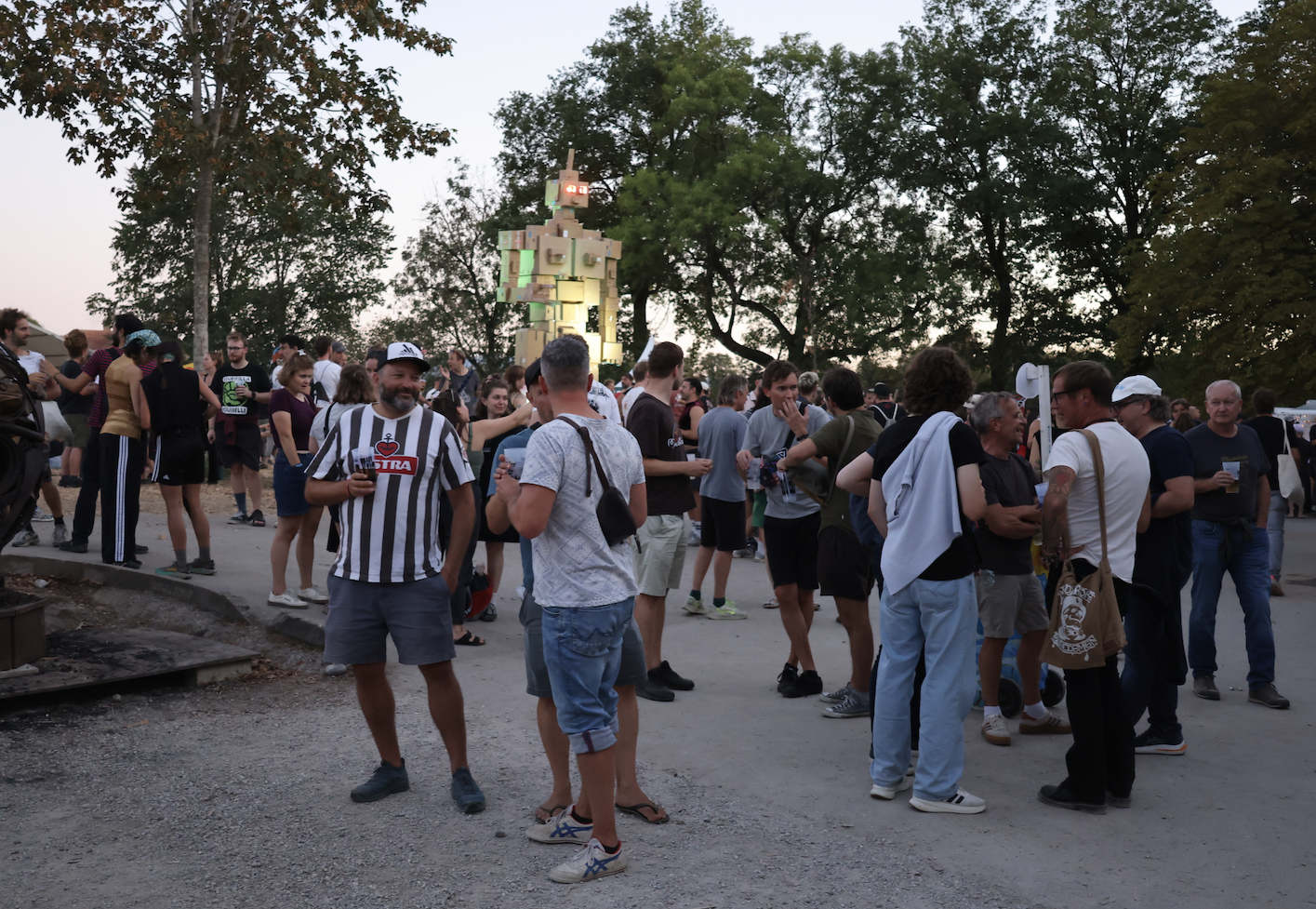
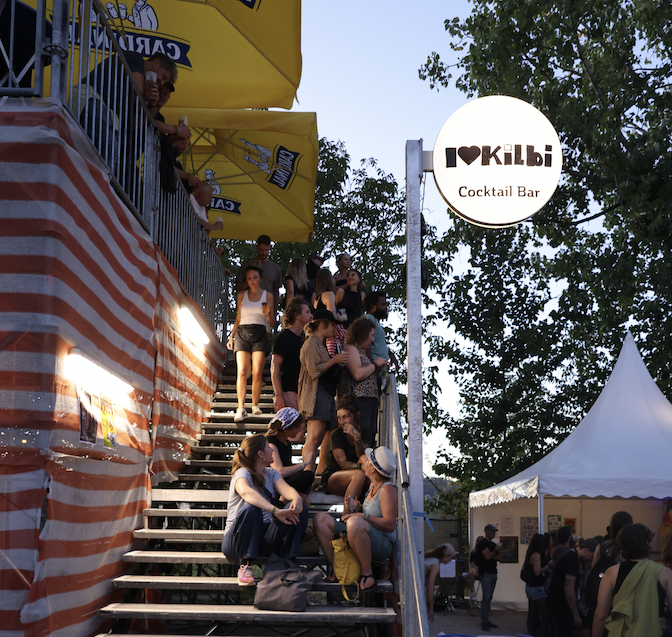
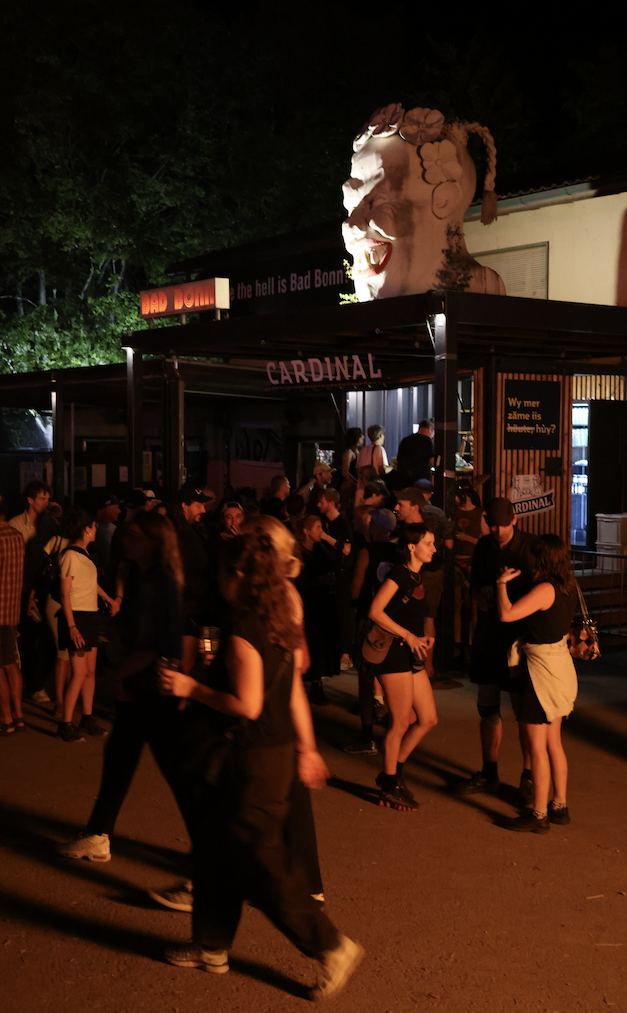
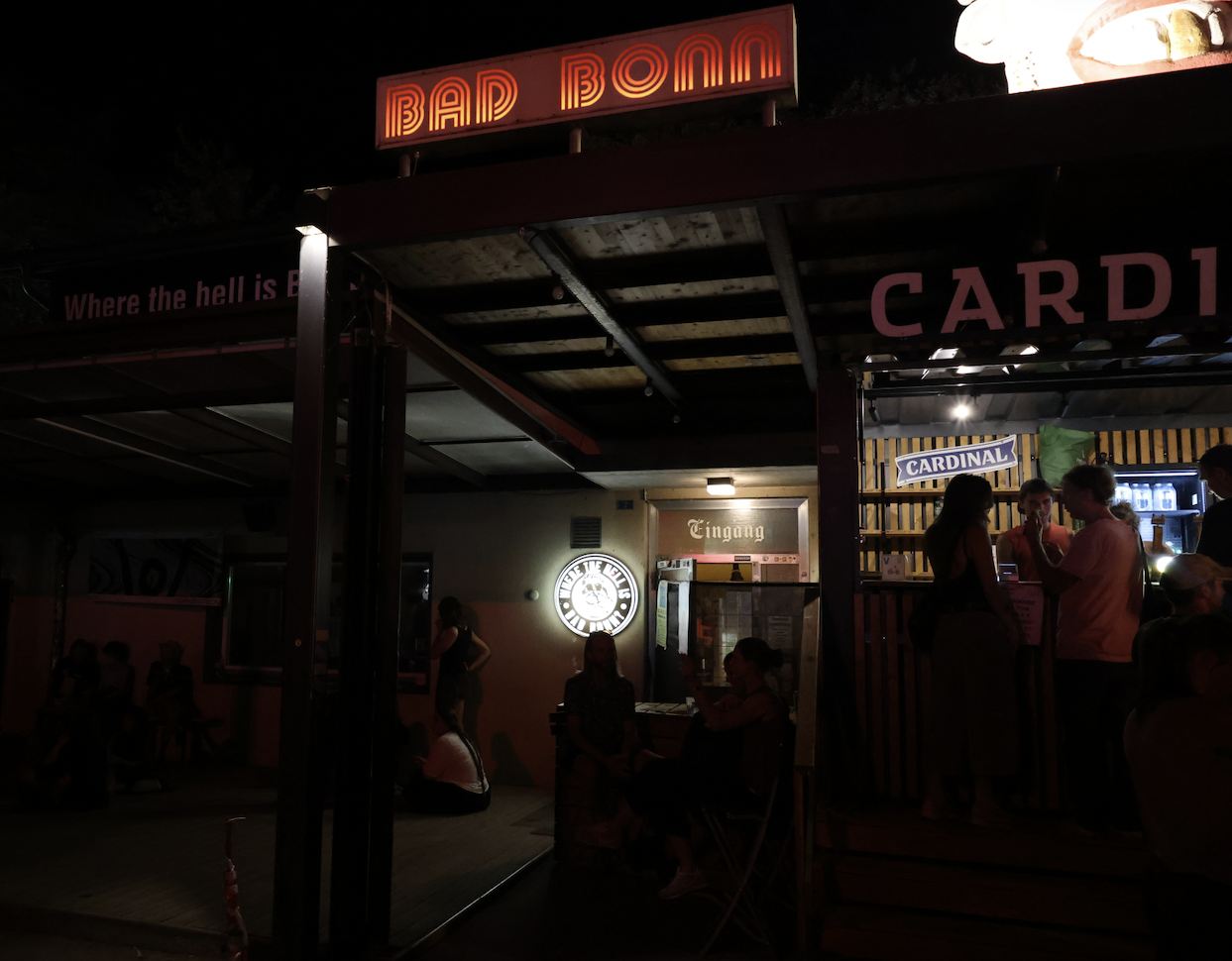
Kilbi had already kicked off the day before I arrived. But it has the same effect every time. After wrestling with the GPS and heading confidently towards Murten when I should have been going the other way, you finally roll into Düdingen, a « village » in full party mode. Fribourg may not be the centre of the alternative culture universe, but frankly, the canton holds its own. The historic Bad Bonn, home to every brilliant expression of that culture, has grown over the years, true to its name: the “Bad” refers to the old baths on the Bonn, the stream that runs right beside it. Friendly volunteers greet you and know exactly how to spread the joy. For the people of Fribourg and their Bernese neighbours, Kilbi at Bad Bonn is simply the right way to start the season. Or finish it, it depends… Herzlich Wilkommen in Guin.
Menstrual Cramps: queer punk, and intelligence
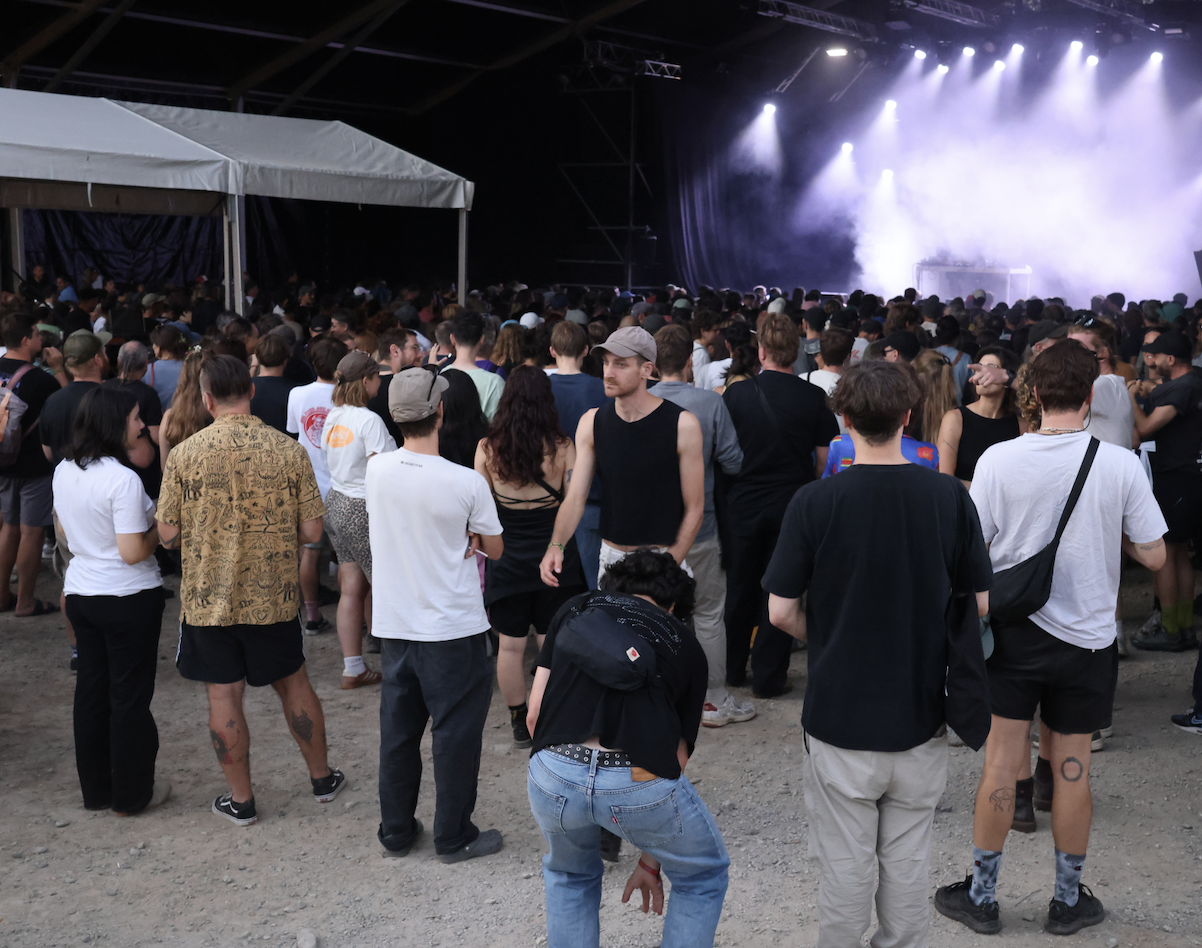
The first gig is in the venue’s low-ceilinged hall (where the world famous Bad Bonn venue organizes concerts all year round thanks to Daniel Fontana and his lovely team). Sweat pours from every pore, and Menstrual Cramps’ music turns vicious, abrasive and penetrating. The band, from the West of England, nails it from the very first notes, and headbanging rides a tide of bodies in motion.
Their message from the stage is as loud as the riffs: governments, abusers, a music industry they call corrupt. Spend your money on good people. Put your money where your mouth is. There’s even a jab at Kneecap. Their song “Don’t Idealize Your Idols” is a smart way of putting distance between us and those who look like saints in public and do the opposite behind the scenes. Kneecap, it seems, is a pain in the knee for Menstrual Cramps.
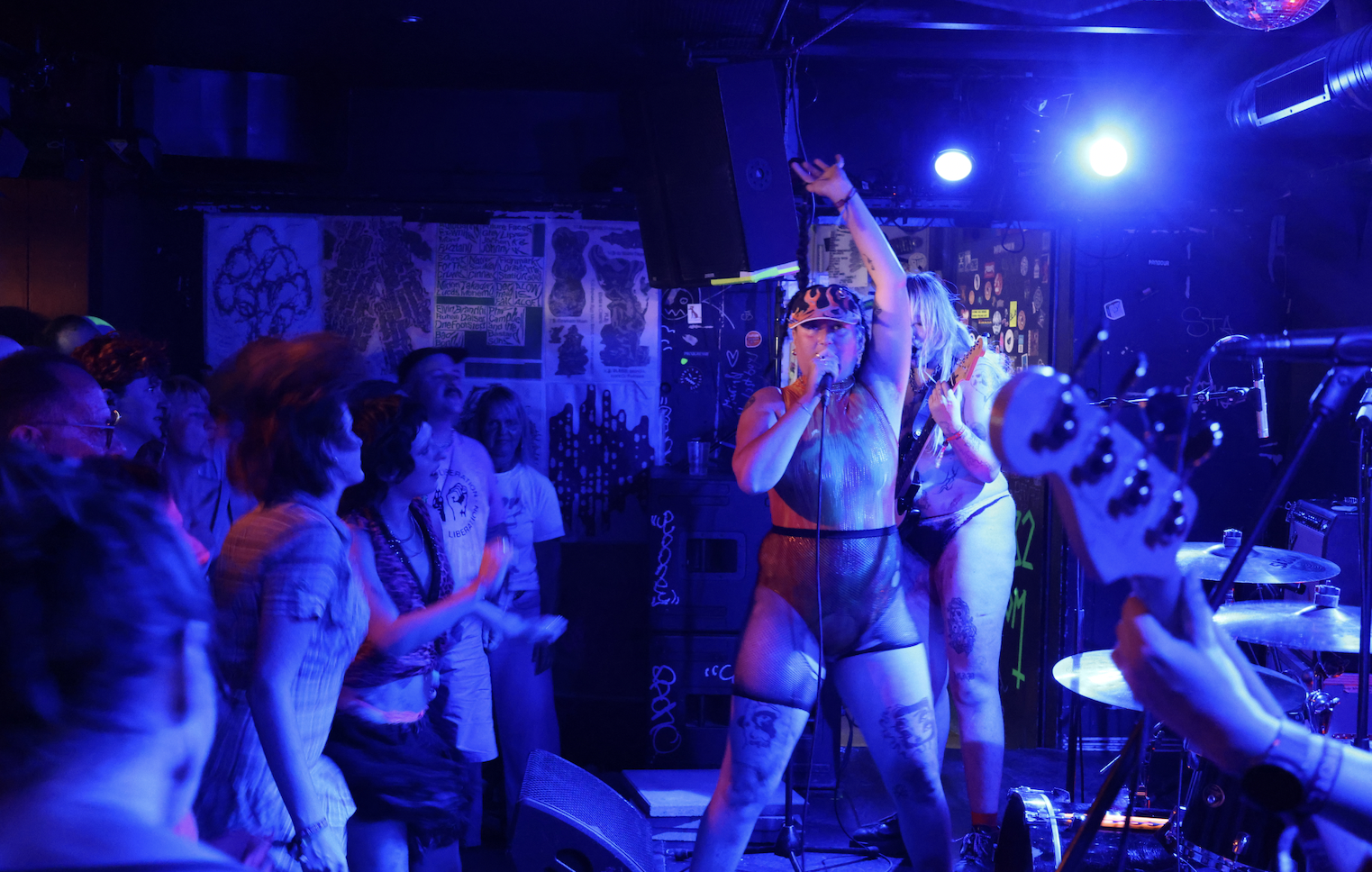
The message is political, and so much the better: we need it. As our societies grow more individualistic and isolated, this band gives depth and weight to a world where our governments casually tend a crumbling capitalist system. They know how to work that message with a Kilbi crowd that is receptive and happy to party, once again mostly Swiss German. That moral compass feels good, and it’s something society has lost sight of.
After a high-energy set and a very free-spirited speech from singer Emilia, I meet the band backstage: AJ on drums, Rat on guitar and Oana on bass. Magical, brutal, refreshing. Queer punk, but not only that.
How did they end up here? “Daniel Fontana got in touch and told us what the festival does. We looked it up online and thought it was amazing. Sometimes after a show people come up and say it was great, and you think, I’m not so sure. But the Kilbi crowd really responded. So you think: they get it.”
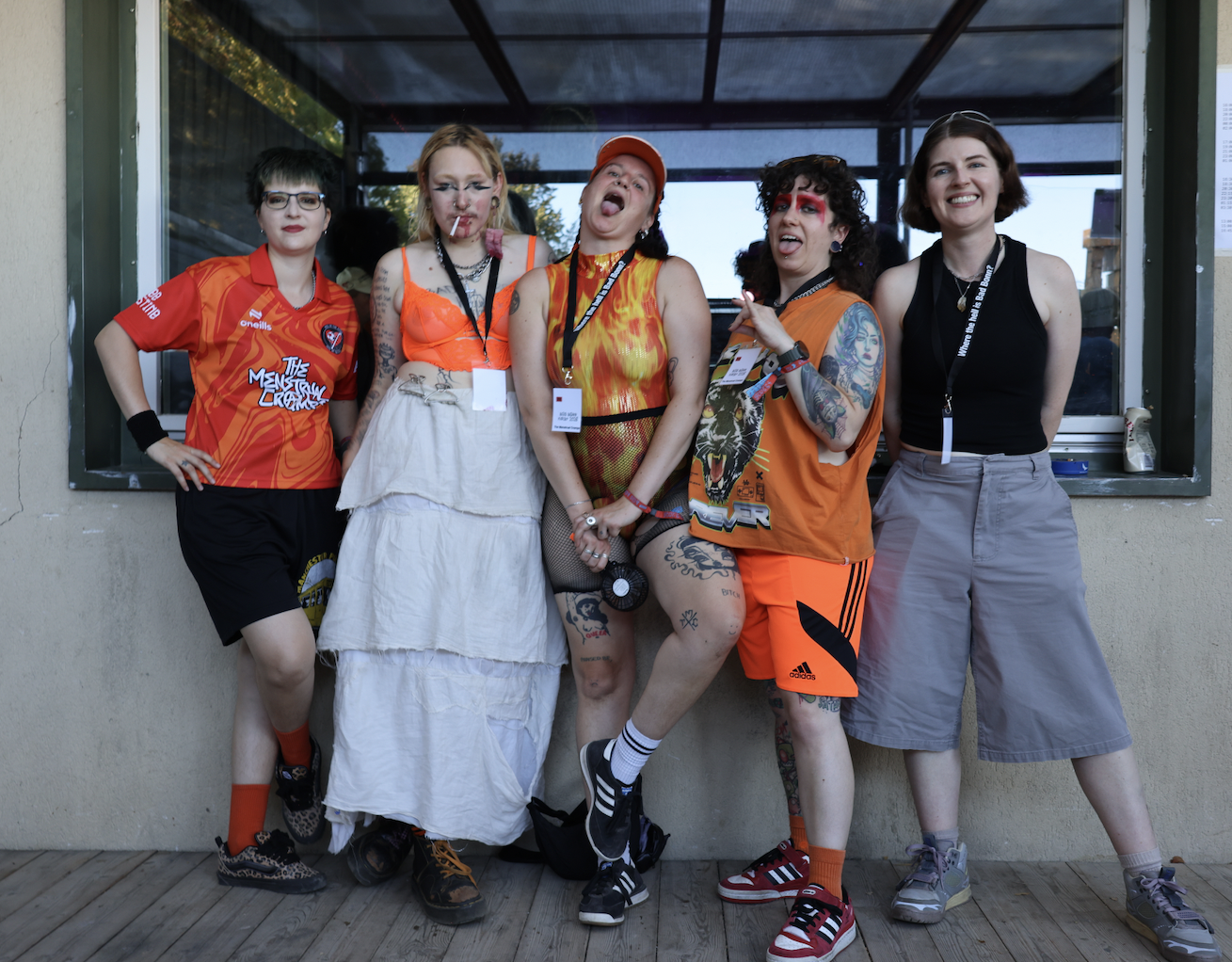
The guitarist laughs about the shock value of their show. “When I dress up and cover myself in blood, some people go ‘what the fuck’. But others go ‘fuck yeah’.”
Their influences read like a riot grrrl reading list: L7, Bikini Kill, Peaches, Siouxsie and the Banshees, and Chumbawamba, with whom they’re friends. “We met Dunstan in Brighton. I love them, I love anarchist bands, punk bands.” The drummer agrees: “I was raised on Siouxsie and the Banshees. All the bands you mention are fantastic. They’ve been a massive influence.”
They also see political awareness spreading into pop itself, with mainstream artists like Olivia Rodrigo and Chappell Roan speaking out and giving back. “They’re very vocal: pro-Palestine, pro-choice. Their younger fans are aware and they’re learning.” Sinéad O’Connor, they say, remains the great example. On Kneecap, they’re more measured offstage: “I can’t really say. Some bands have quite a linear way of looking at politics.”
From Bristol, with love
On the music industry, they don’t mince words. Menstrual Cramps signed to an independent label and keep full control of their rights. “The people at the label are lovely. You don’t sell yourself, you have total creative control.” They tell the story of an artist who blew up on TikTok and signed with Universal, only to be told her album wouldn’t come out until next year. “The majors sign bands and put them in the fridge to avoid competition, then bet everything on one act. And you end up owing your label money because you have to hire people. Some owe so much it’s impossible to pay back.”

The band was born about ten years ago. “I was writing poetry, I didn’t have a job, and we built a band around it.” A drummer joined a year later; then came new members, departures and friendships along the way. “We became friends. I wanted to be in a band, so I play bass.” Home is Bristol, and they’re proud of it. “Back then it was trip hop. Idles are from there too. There are strong scenes of every kind: trip hop, dubstep, hardcore punk, St Pauls Carnival, funk, jazz, soul. Musically, it’s fantastic.” After Switzerland, they dream of Japan, and of going as far as they can.
Flutes, folk and walls of sound
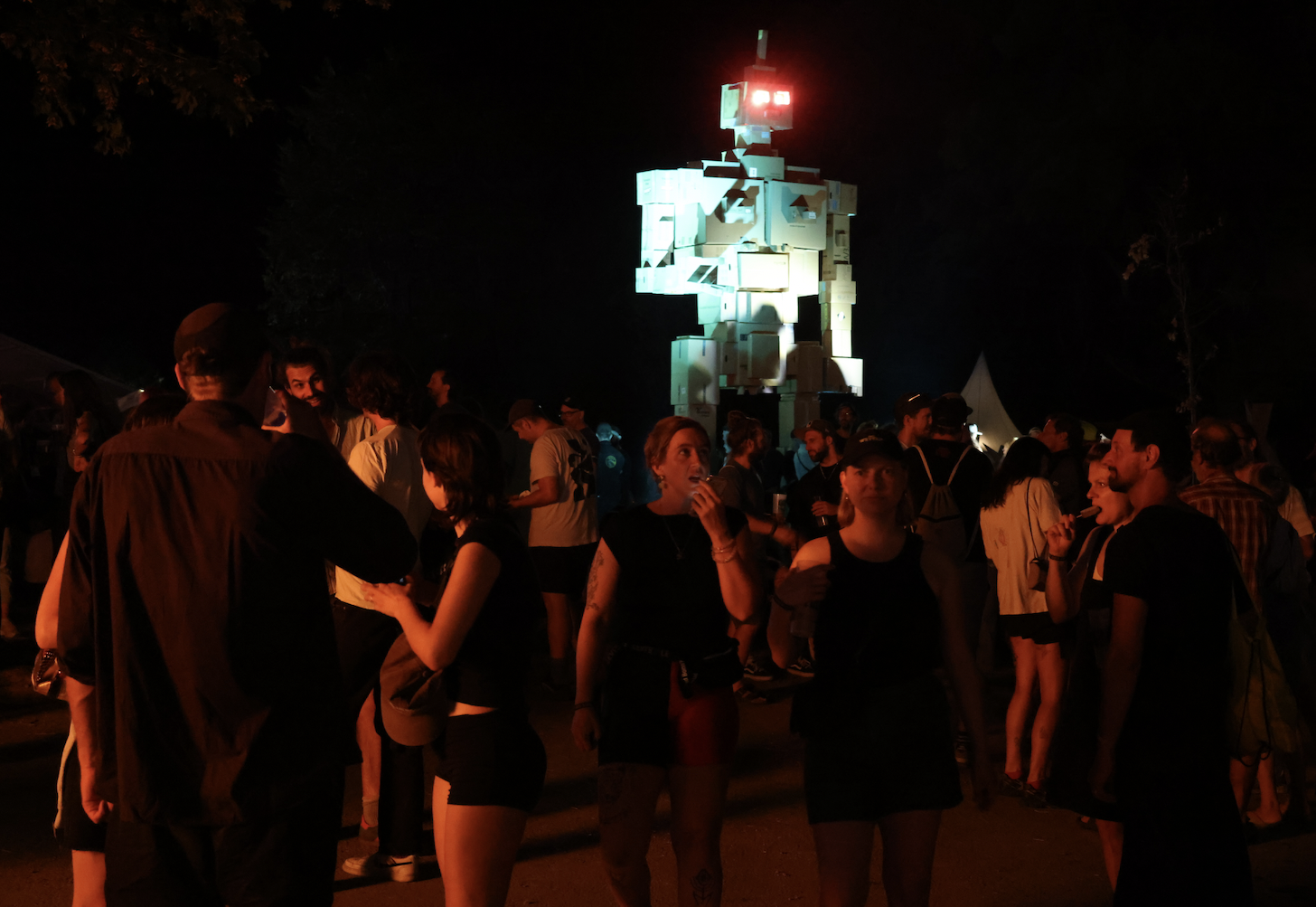
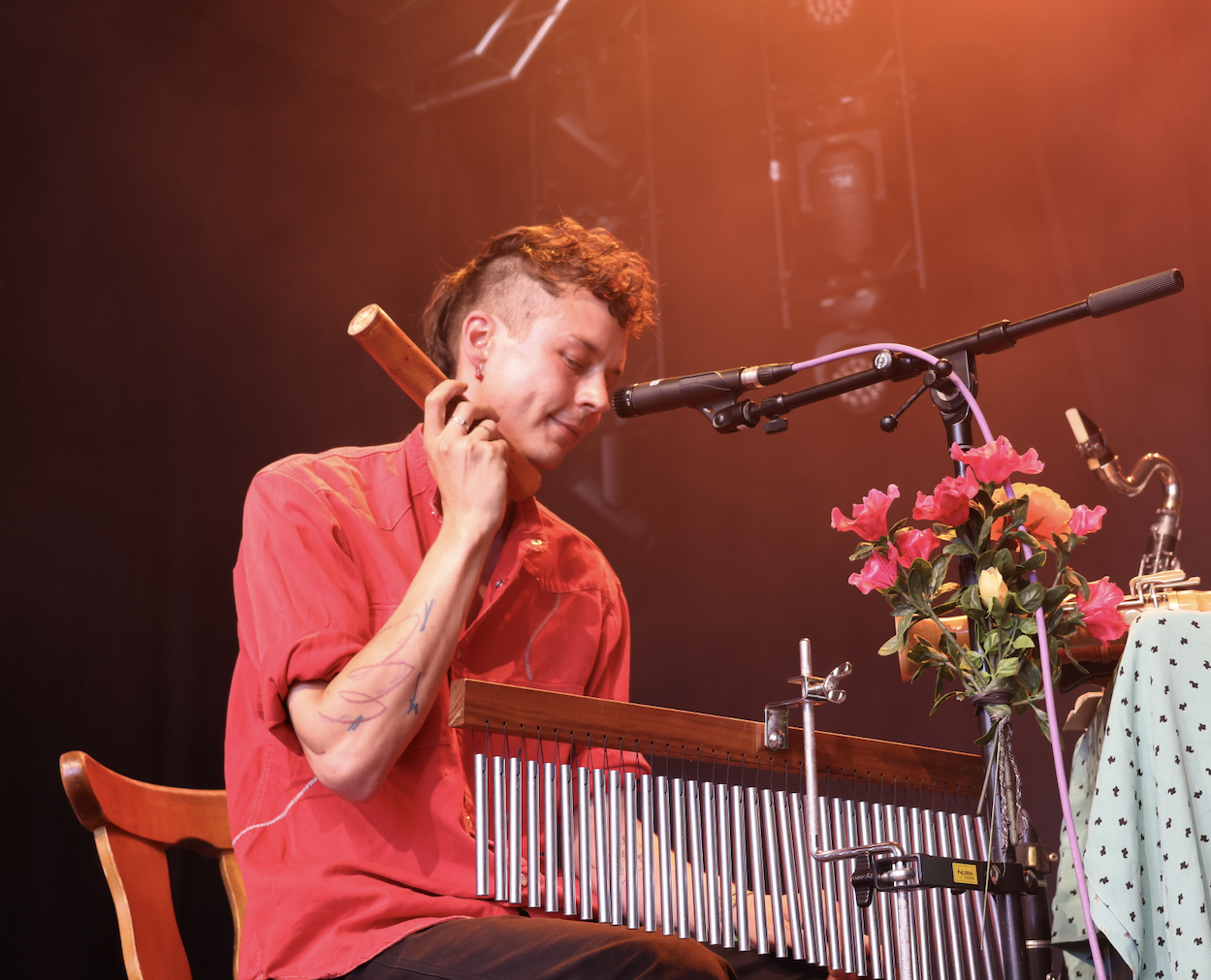
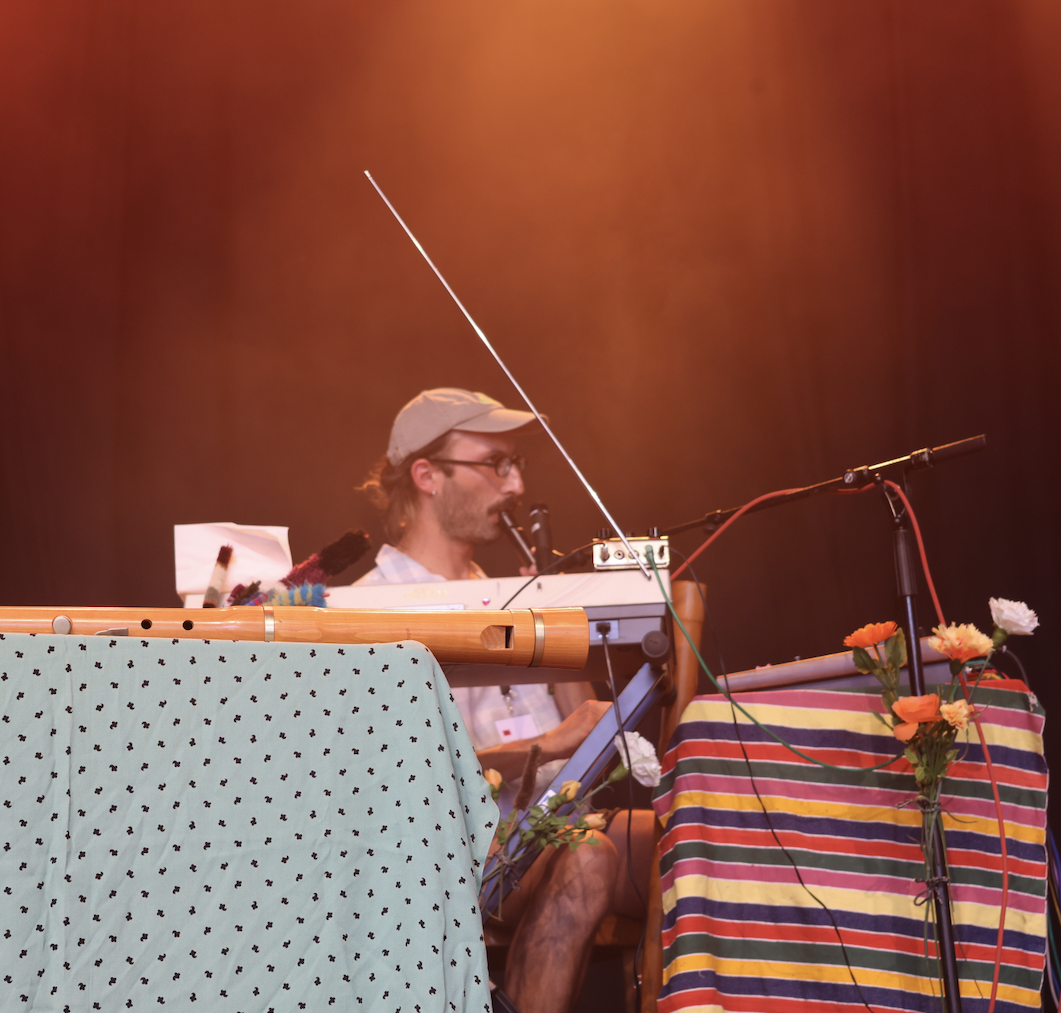
Flutoroma go all in on hits and variations on a single theme: the flute. You might find the idea a little basic. It brings back memories of school, where the instrument was handed out at a bargain price to countless kids cutting their teeth on a strange tube never seen on TV or in their favourite stars’ concerts. But it works remarkably well on the Kilbi stage. The ensemble’s strength is to carry melodies into another, steadier paradigm. The woodwinds slip into your ears with ease, and you realise what flutes can do for morale when they’re put together right. It’s enchanting, hypnotic and fundamentally joyful.
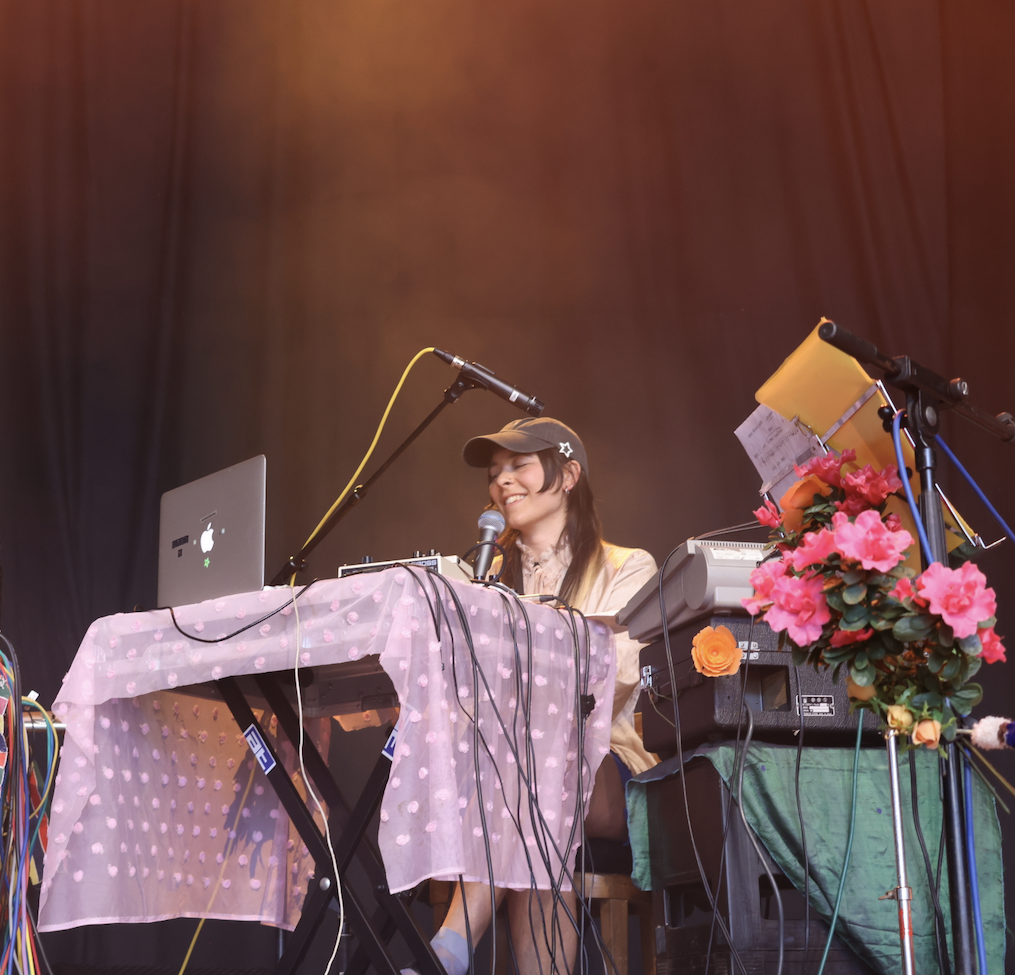
Mark William Lewis delivers raw, fading folk: wildly original, with a quiet poise and effortless class. A great London discovery signed to A24 and self-producing since 2019, he’s backed by a very strong band. Live, his multi-layered approach has a cool groove that is incandescent at the same time, reinforced by harmonica. The British singer pushes his songs towards classy pop, with that twangy guitar. Richard Hawley, Steve Mason, Matt Johnson and their cousins Mark Kozelek, Mark Eitzel and Joseph Arthur would surely agree: Mark William Lewis belongs to a club where songwriting is married to a real flair for performance and vocal harmonies. It galvanizes people. He has real gems in his songbook and knows how to push indie folk further.
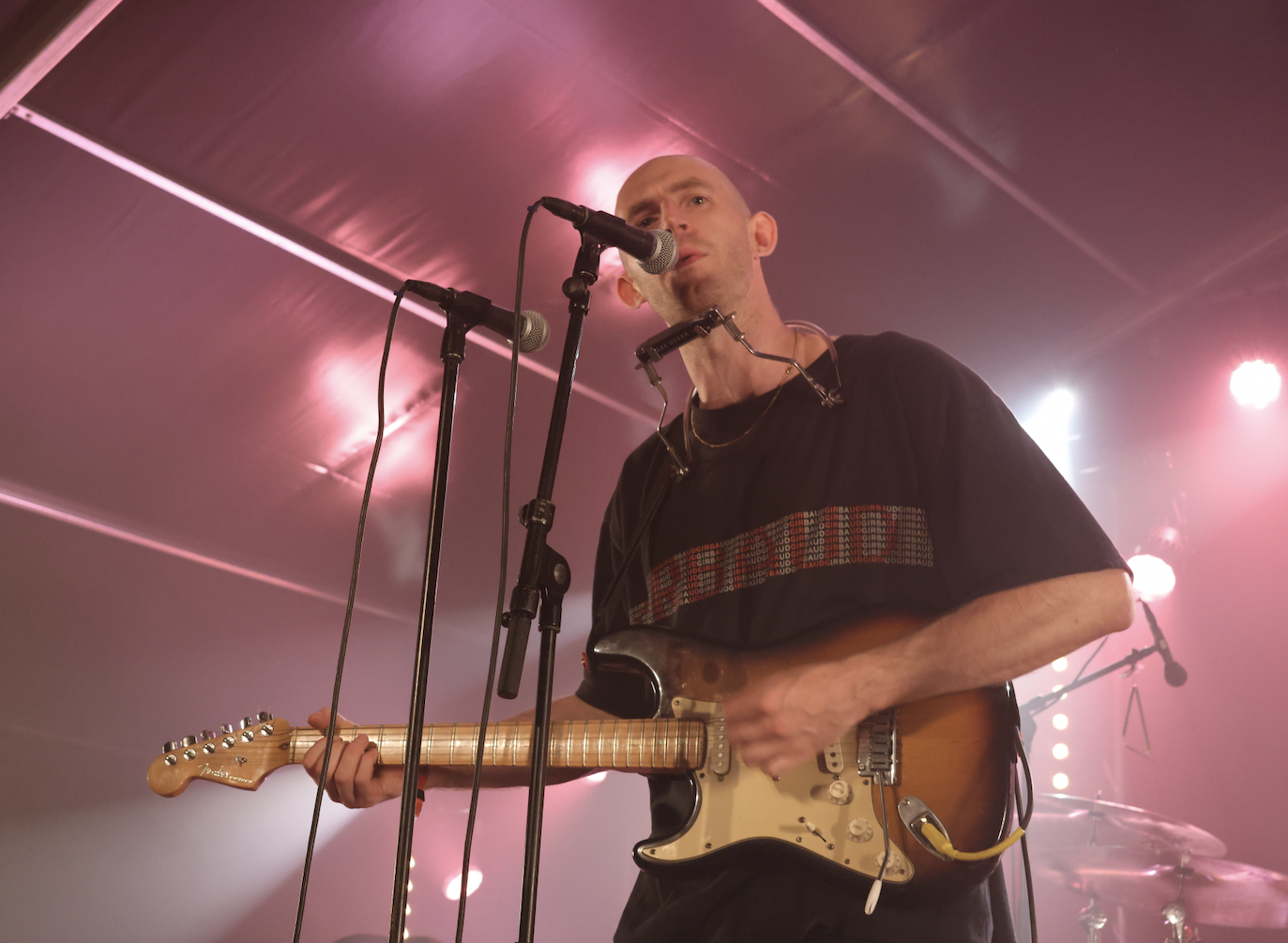
On the same stage, Drook, from Richmond (and stepping in at the last minute for a band that couldn’t make it, if I understood what my friend Marc Ridet told me) unleash their shoegaze magically and generously. Echoes of My Bloody Valentine and Slowdive’s abrasive beauty blend with a powerful, experimental power-pop vision of rock, dear to US bands like Sonic Youth.

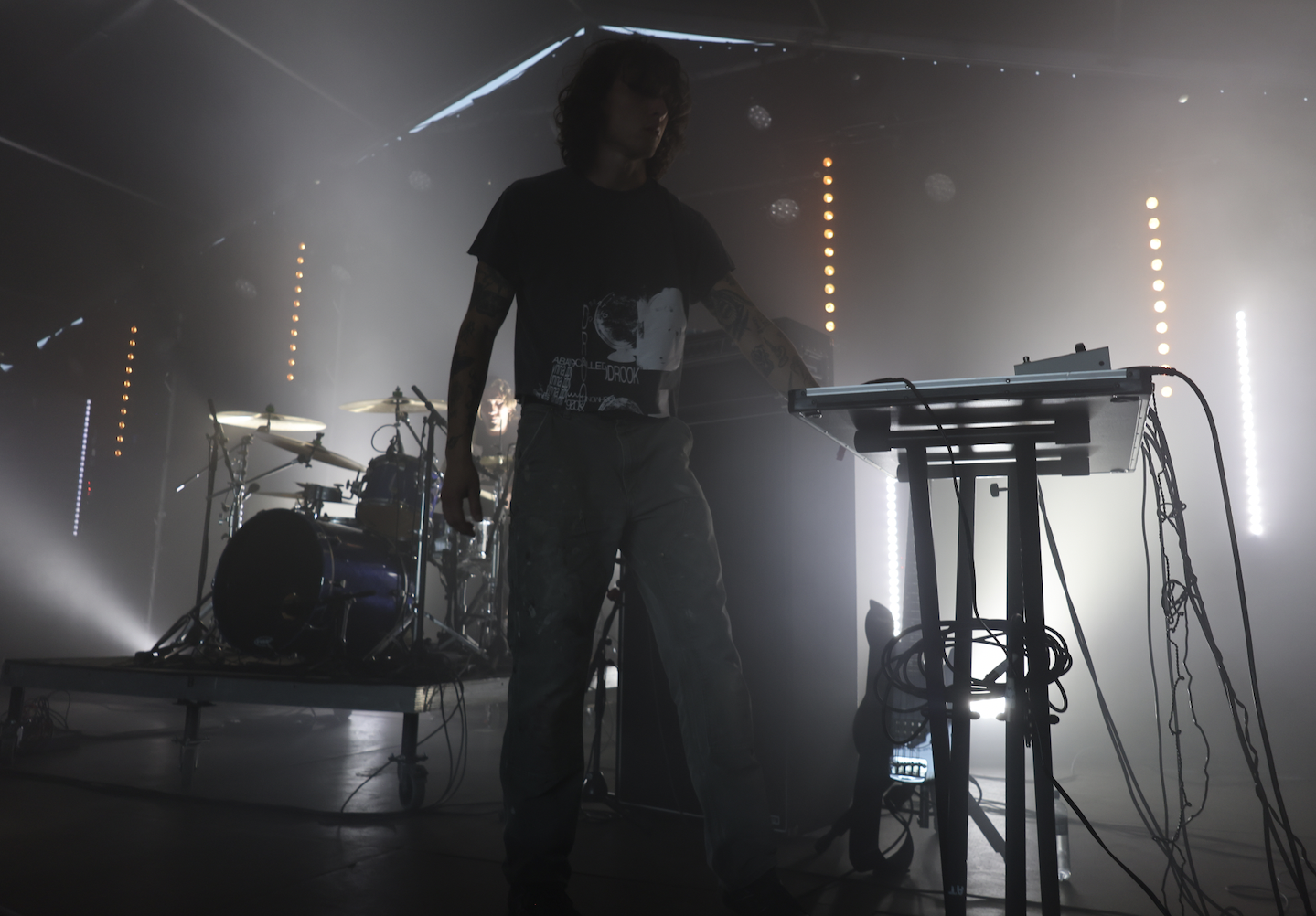
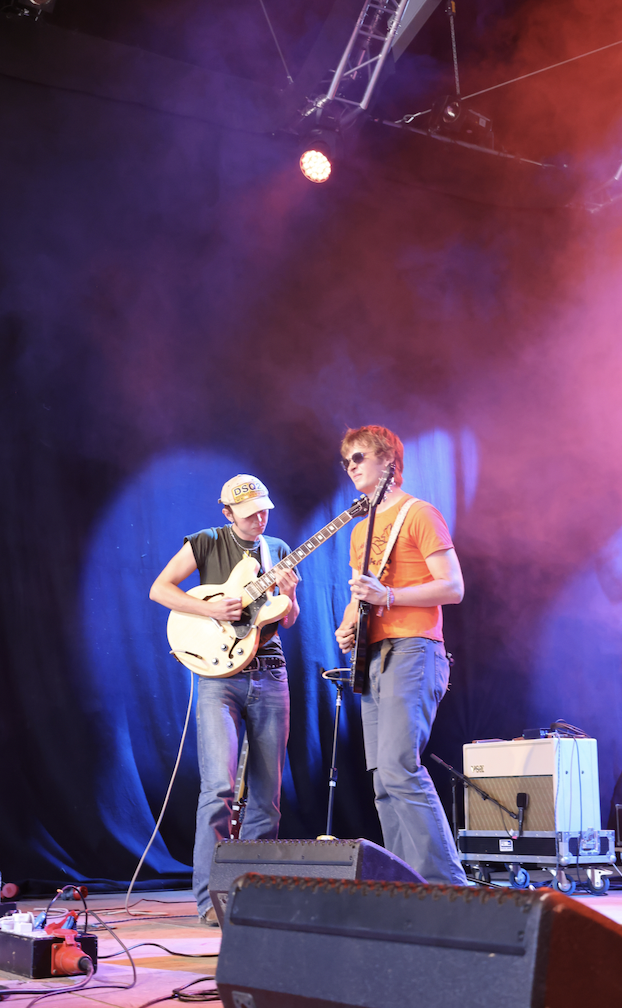
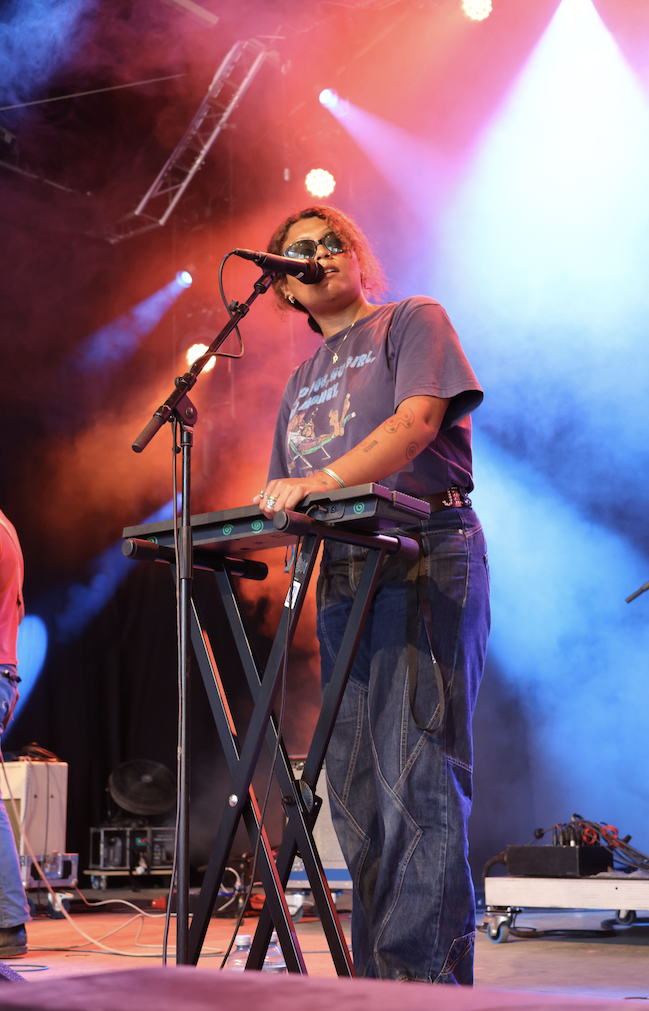
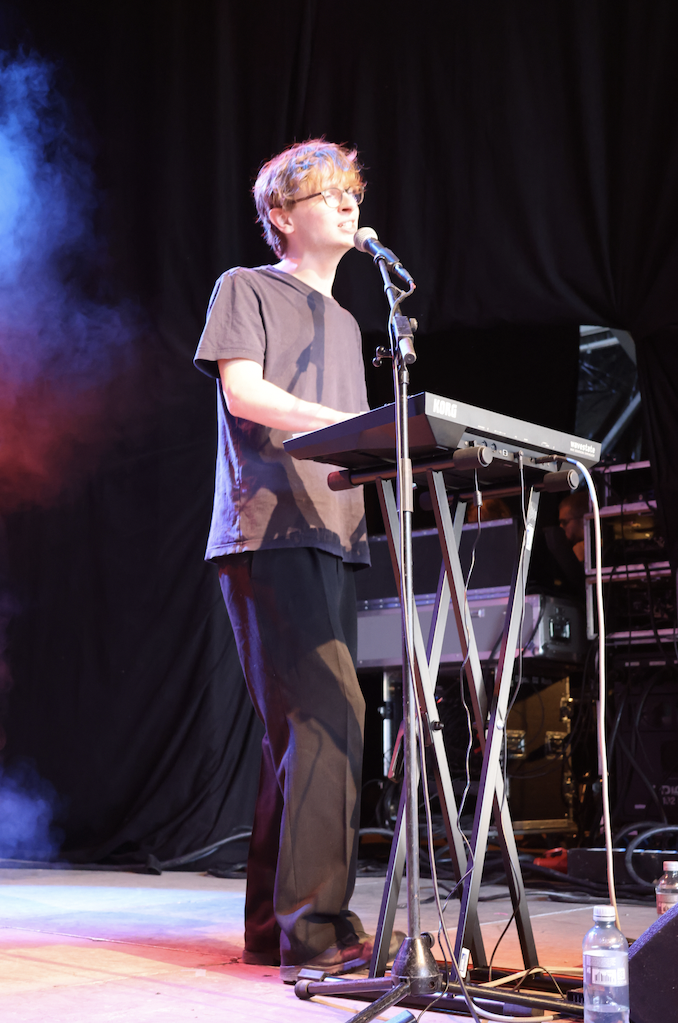
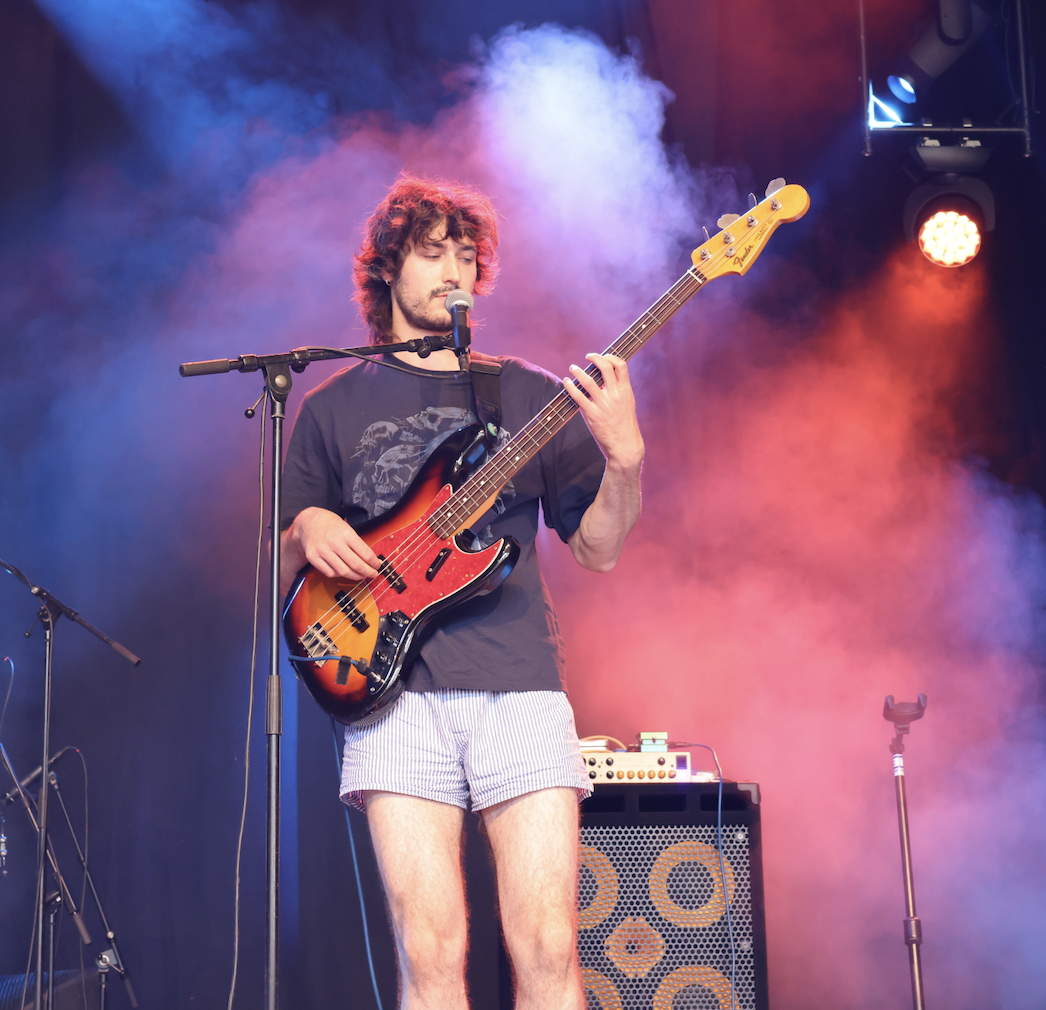
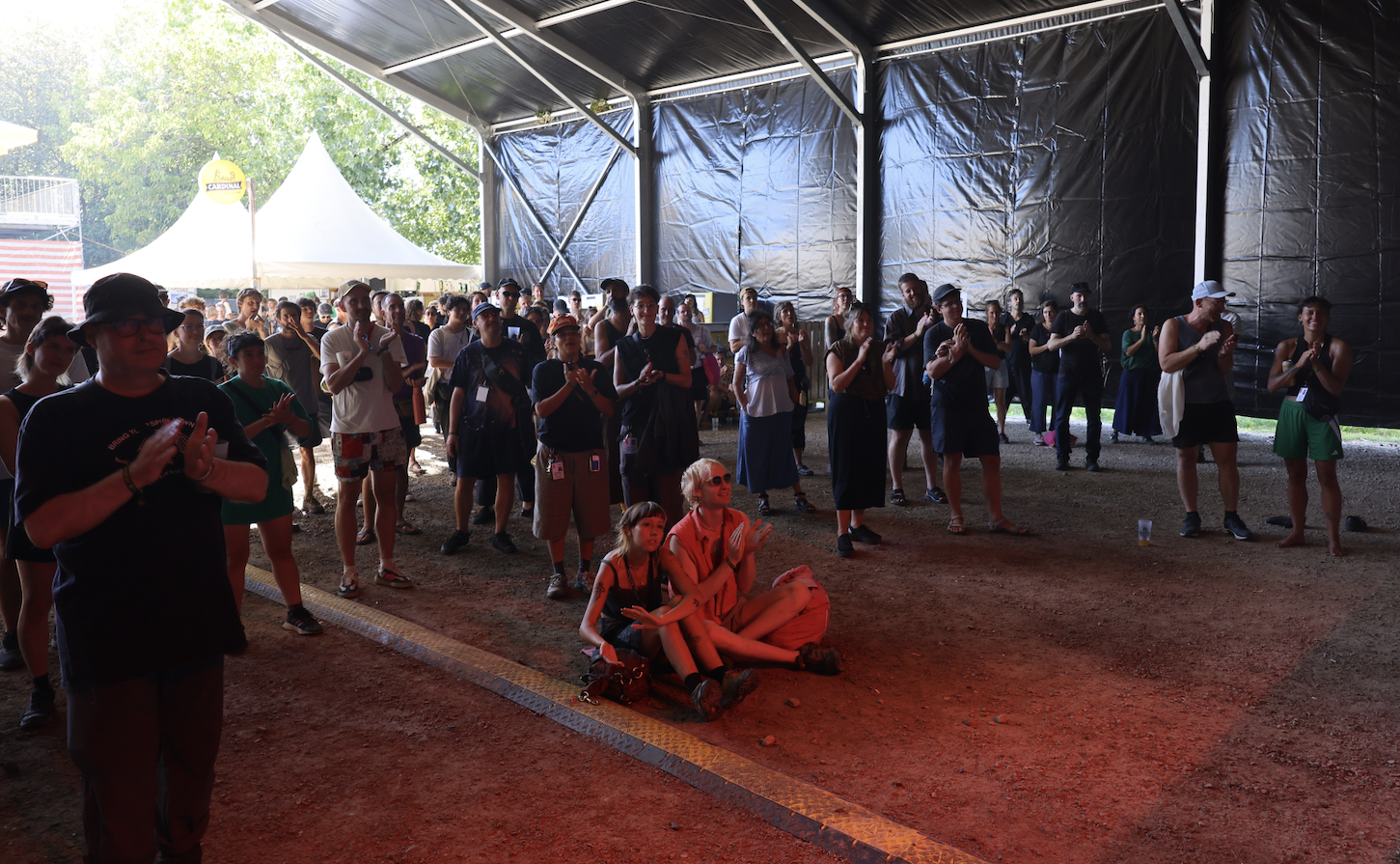
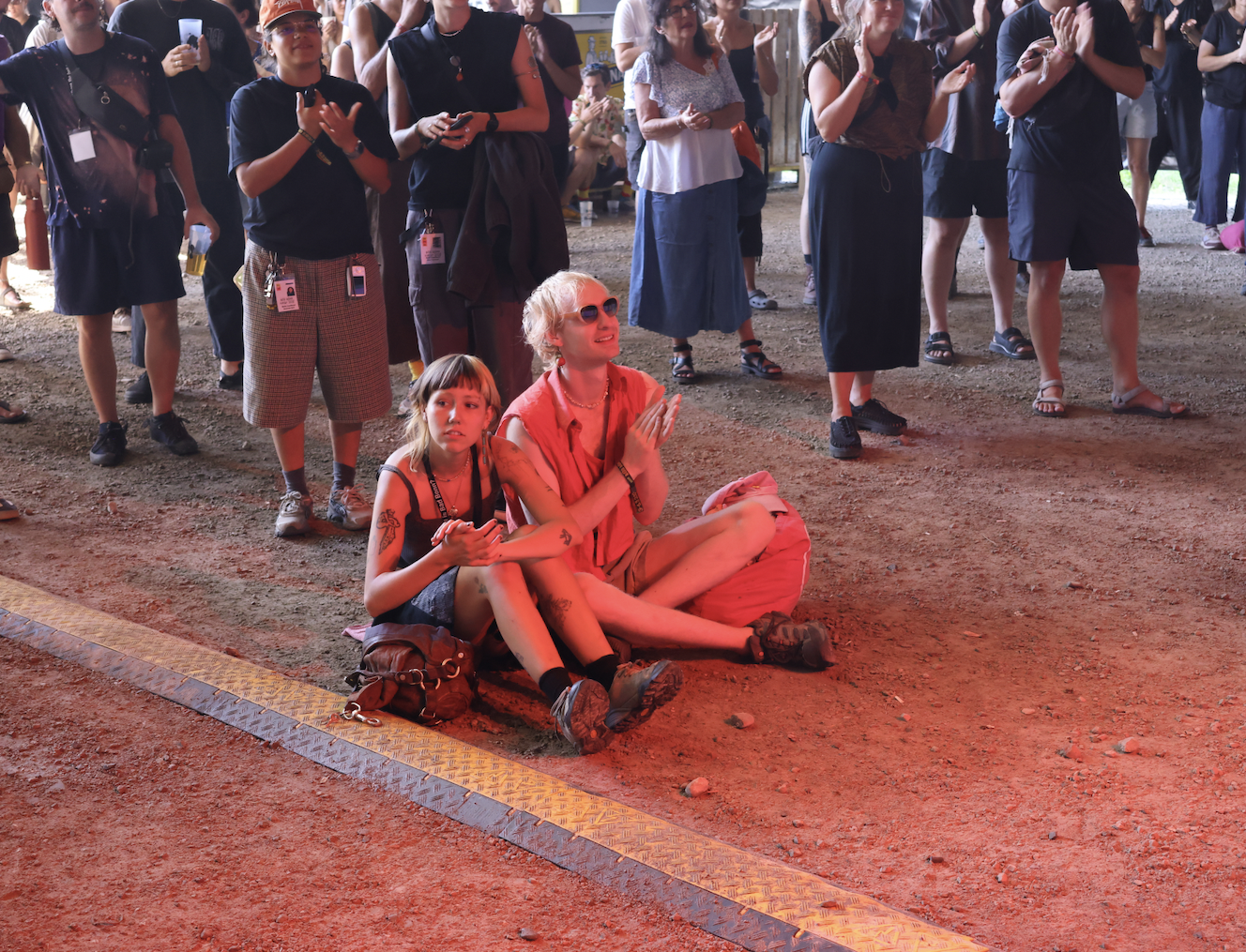

There’s sonic exploration, shrill feedback, whirling improvised figures pushed to the max over stretched-out rhythms, and voices beautifully melted into a mighty wall of sound full of breaks and restarts. The melodies are gorgeous: ethereal waves softened by an airy drumbeat, gentle in every way. Strapped to her Jaguar, Drook’s singer Liza Grishaeva (main photo of the article) is clearly having a blast, her sugary voice entwined in a distortion that carries.
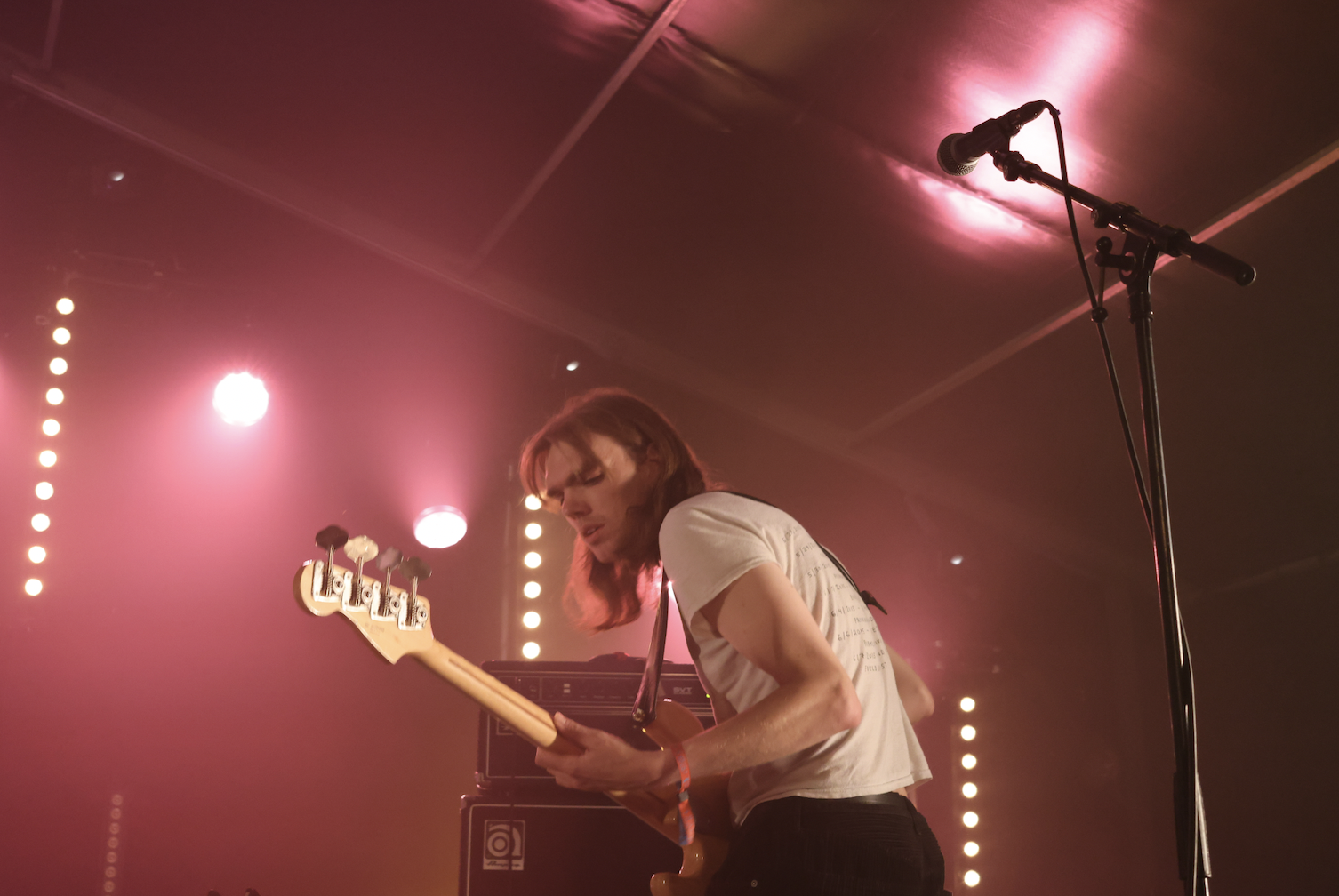
On Saturday night, on the stage by the entrance, One Leg One Eye cast an uncontainable spell. I love their work on depth, with powerful, semi-industrial layers unfolding over a myriad of experimental sounds.
Saturday night: fury and fun
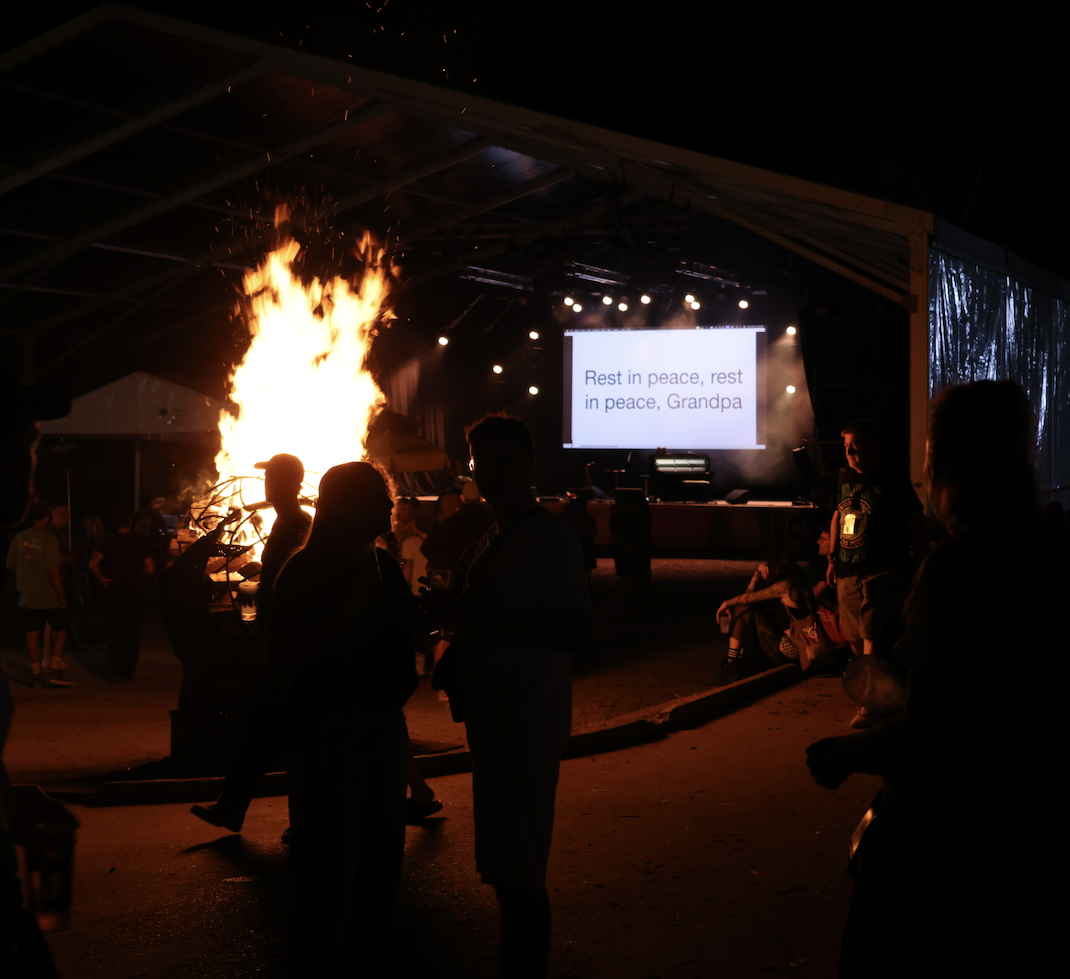
Then come grind and hardcore the following day at Kilbi, with a pro-Gaza, inclusive political message. Eva Leblanc, a trans Venezuelan woman based in London, embodies the fight against the worst kinds of conservatism, religious bias and the absurd calculations of those who cling to power. Traidora are explosive. They pull us into a circle, a safe space on fire, an exceptional decompression chamber. Booming bass, stridency, dissonance and sheer heaviness, with a reminder from the stage of the 73,000 dead (or more ?) in Gaza: a treat for a crowd hungry for explosive, redemptive riffs. Screams, howled choruses.
Before Traidora, Die Brennnessel, an arty Swiss-German and German outfit with a singer straight out of the dressing-up box, mix rock, electro and industrial in an incomprehensible ballet. Never mind: art is free, and this is a joy. They play political theatre with a comic touch, and the singer’s look carries whiffs of the Neue Deutsche Welle.
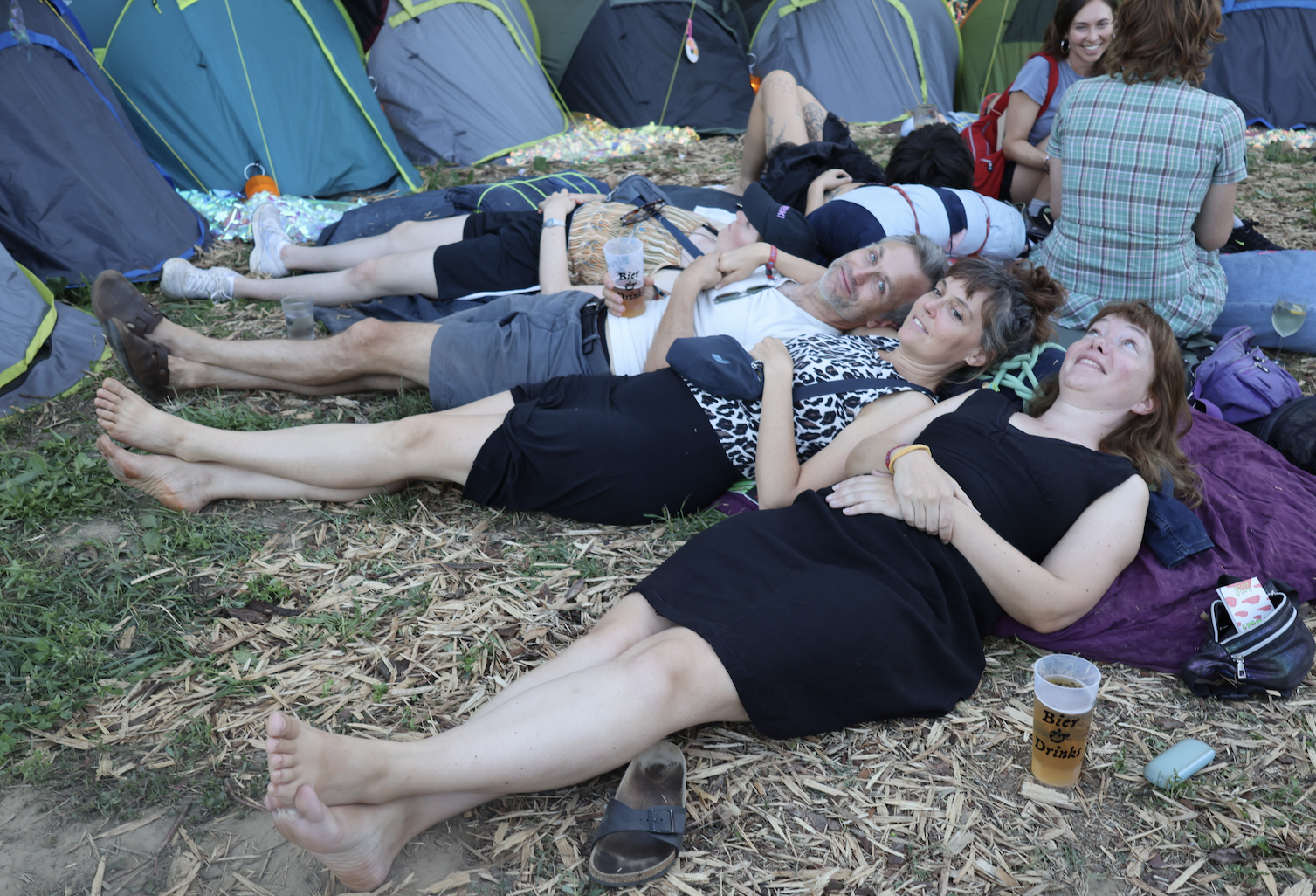
I also meet Manic Pixxies, a Zurich collective of artists blending genres, winners of M4Music and clearly winners of the Kilbi crowd’s approval too. They tell me they’re playing Label Suisse in Lausanne: a date I won’t be able to keep, sadly. It’s a big opportunity for these young musicians to show what they’ve got. That’s the spirit of Kilbi, mastering the young prospects and giving them space on its stages.
My highlights
Menstrual Cramps, of course: powerful, uncompromising, exactly what a festival needs. Drook, for stepping in at a moment’s notice and turning it into one of the weekend’s most beautiful sets. And last but not least Myron Higor, a real crush, with his saudade of Brazil’s Nordeste. It’s cool jazz with a bassist in full flow, conjuring images of nature, gentle company that pulls you into the movement and lets you let go. Kilbi was joy, Kilbi was Joga Bonito and Kilbi was my World Cup. Daniel Fontana for FIFA President !
David Glaser (photos and texts)
Thank you dear Kilbi Team, and a shout out to Anna Barras


