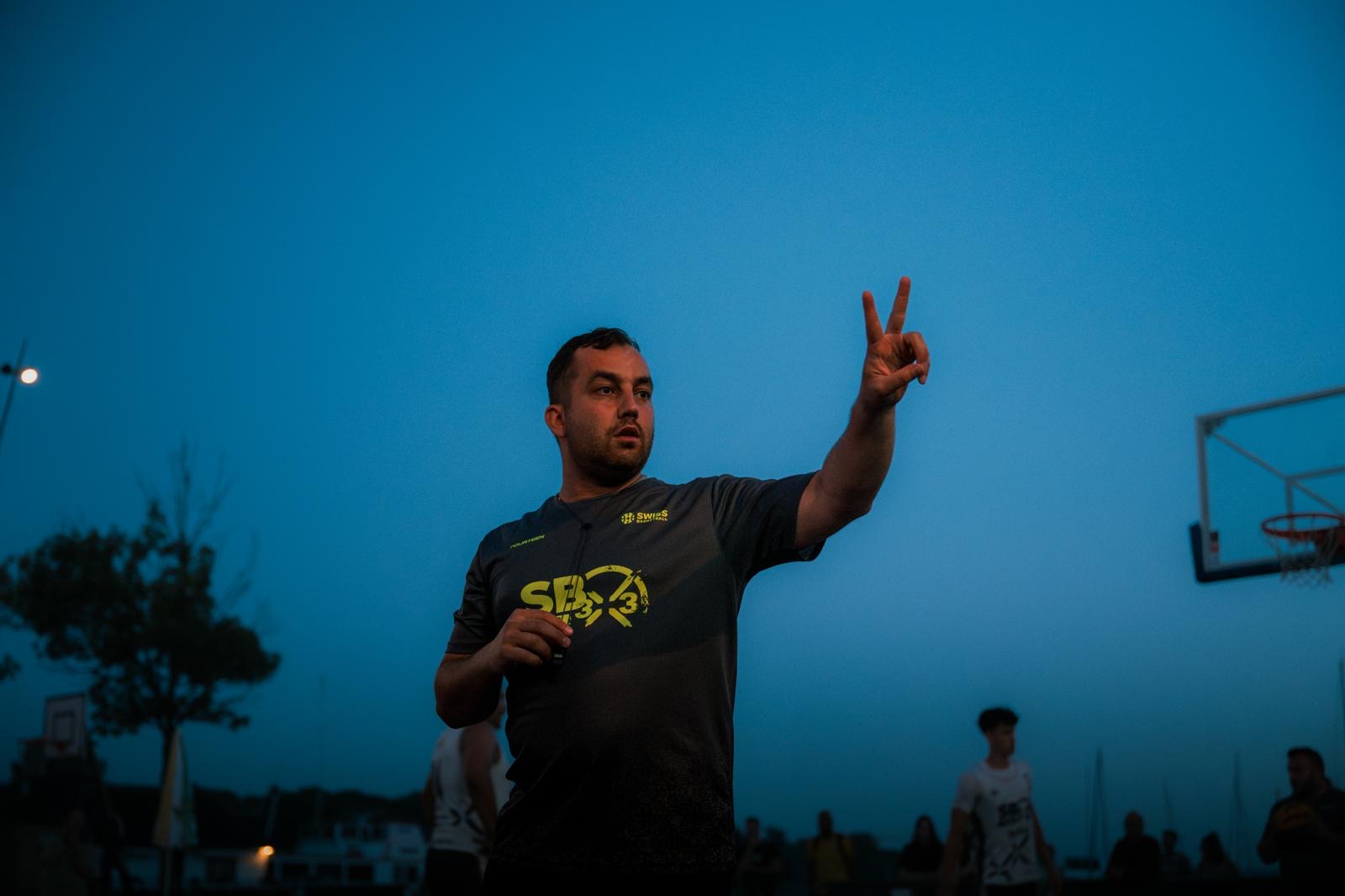
Swiss‑Serbian referee Miloš Jovanović has become one of the key figures of 3×3 basketball officiating in Switzerland. Recently appointed as a FIBA 3×3 international referee, he tells us about his journey, the evolution of the sport, and the culture that shaped him. Here is the full interview.
Who are you, Miloš?
I’m Miloš Jovanović. I was born in Serbia but grew up in Switzerland, near Lausanne, in the Lavaux region. My entire life, basketball, family, studies, work, has been here. So I really feel like a Swiss‑Serbian mix.
When did you decide to specialise in 3×3 officiating?
Around five or six years ago. I saw an opportunity: 3×3 was still young, not everyone understood it, but it was growing. I wanted to grow with it.
You’re now a FIBA 3×3 international referee. How did you react when they told you?
Honestly, I was surprised in a good way. It happened during the 2024 World Tour in Lausanne. Everyone was there: my family, FIBA staff, friends. When they told me I had passed, we celebrated together. It felt like ten years of work finally paying off.
What does it take to become an international referee?
It’s not about being the “best”, but being consistent in all criteria: mechanics, rules, fitness, psychology. First, you must be strong nationally. Then you might be invited to a FIBA clinic. For me, it took a decade from my first tournament to earning the license.
Debrecen was an important step for you. What happened there?
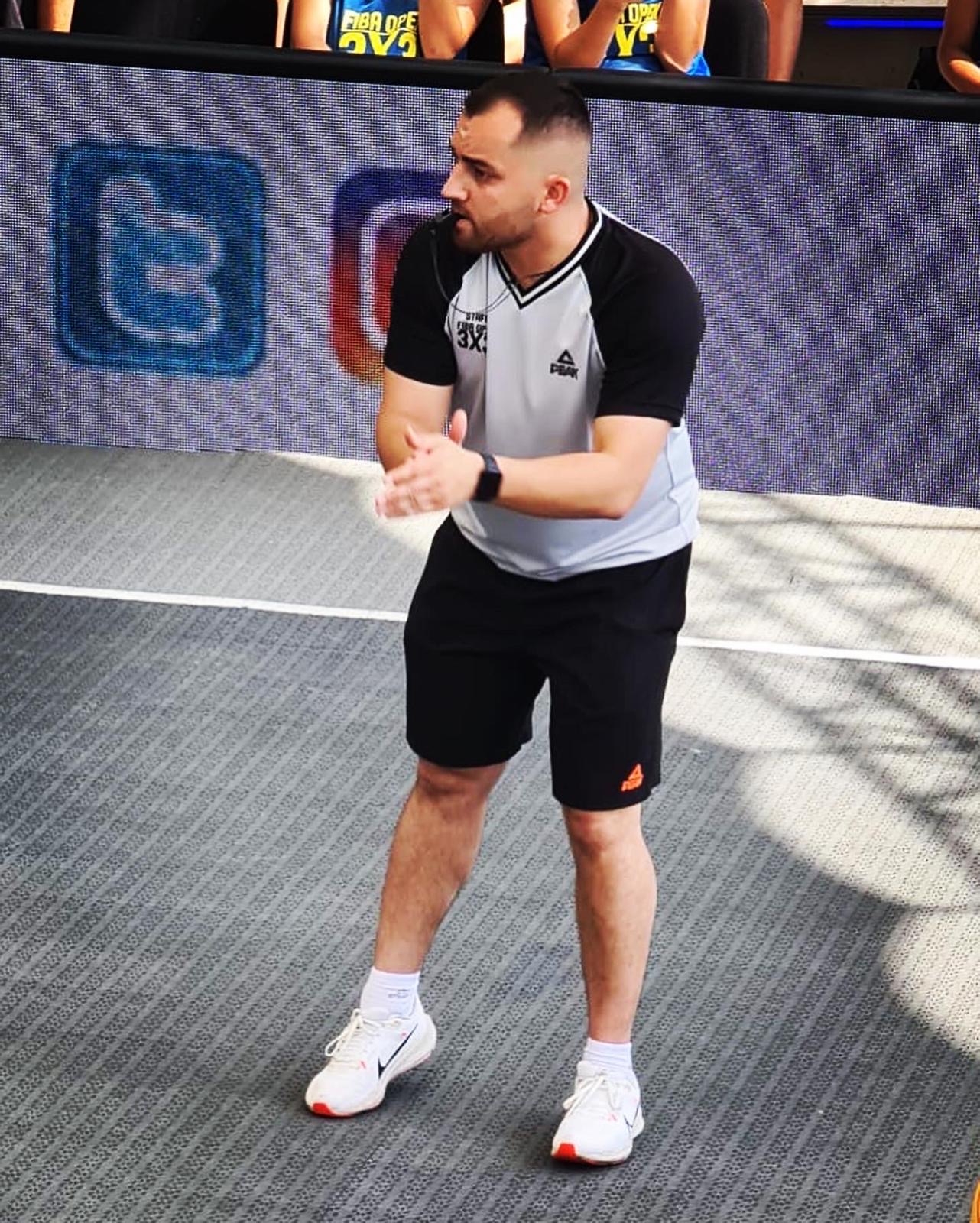
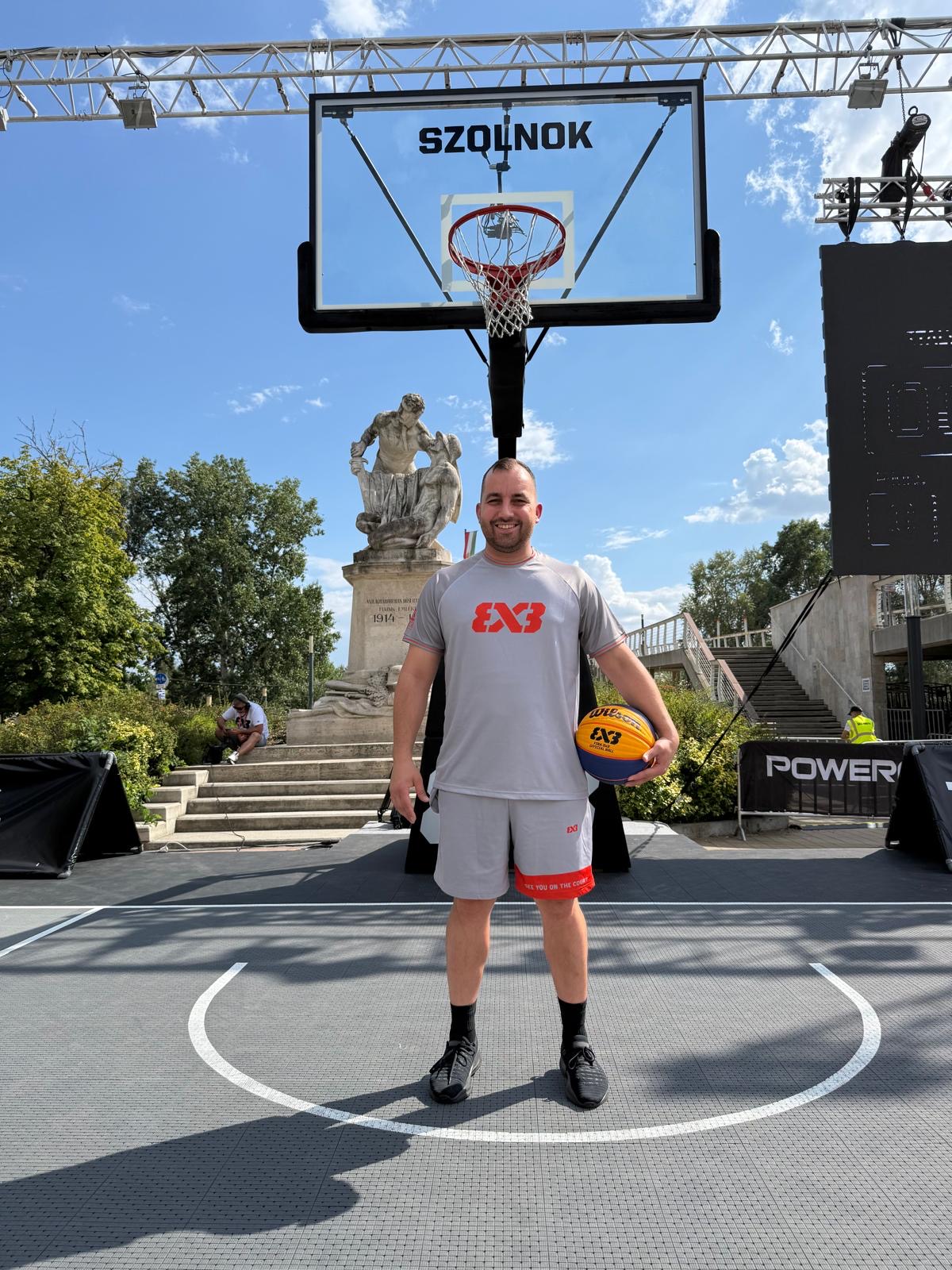
Debrecen (Hungary) was my FIBA clinic site, five or six days of intense work. Two days of theory and testing, followed by four days of games. I officiated the women’s final, which was a big moment. But the best part was bonding with the twelve referees in the clinic; we grew together.
For those who don’t know: what makes 3×3 different to officiate?
It’s faster, more intense. Only ten minutes, no real breaks, a 12‑second shot clock. You must stay focused the entire time. TV timeouts help us breathe, but the mental intensity is higher than in 5×5.
Is there video review in 3×3?
Only at the highest levels: World Tour, World Cup, European Games. Not in Switzerland. So we rely heavily on teamwork and concentration.
How is the Swiss 3×3 championship structured?
Swiss Basketball has been growing the discipline for five or six years. There are four Swiss Tours, a big final in Zurich, A women’s tour, Quest tournaments organised by Lausanne, Montreux, Lugano, Winterthur… These events help referees and players develop.
Lausanne is a pioneer in 3×3. How do you see their impact?
I saw the Lausanne team grow from the beginning. They built the 3×3 Lab in Beaulieu, which helps both players and referees. Sometimes we run clinics with them, mutually beneficial.
Do playing styles differ between countries?
Completely, South Americans are strong, physical, aggressive, Balkan teams are systematic, tactical, structured, European teams are tactical, North Americans are late to 3×3 but are growing fast, especially with LA 2028 coming. There’s a real cultural mix on the court.
Which teams dominate the 3×3 scene right now?
UB (Serbia) is huge, Amsterdam is always a contender. And Lugano from Switzerland impressed me a lot recently. The sport is evolving: more professionalism, more surprises.
Do teams still recruit 5×5 players?
Less and less. At the beginning, yes. Today, 3×3 specialists are emerging. One day, players will probably need to choose between the two formats like referees do.
Why is Miami becoming a big 3×3 hub?
The U.S. entered the game late, but they understood the potential. With the 2028 Olympics in Los Angeles, they want to win at home. Miami is leading that movement.
Is 3×3 bringing more creativity compared to the “stereotyped” 5×5?
Yes. It used to be all about highlights, dunks, big shots, but now it’s structured, with up to 20 offensive systems. Teams take it seriously, and it shows.
What did you think of the Olympic final in Paris?
It was a great image for 3×3. Intense, emotional, ending with a dagger from the Dutch team. Officiating an Olympic final is extremely rare, and the referees did an excellent job staying focused.
3×3 is linked to hip-hop, outdoor culture, loud crowds. Does that matter?
A lot. Different countries bring their own music and atmosphere, Balkan folk, Swiss urban vibes, lakefront courts… People come even if they’re not big basketball fans. It makes the sport accessible and fun.
Tell us about basketball culture in Serbia.
It’s in the blood. Everyone plays outside. Even if you’re a football fan, you still play basketball. The arenas in Belgrade are unreal, 20,000 people, pure passion. Same for 3×3 in Novi Sad. You must experience it to understand.
Do you communicate with players during games, like in 5×5?
Yes, but coaches cannot stand on the court in 3×3, which helps. Communication with players helps control the game and defuse tension. Sometimes it works, sometimes not, but it’s essential.
How about communication off the court?
We avoid it right after games to prevent misinterpretations. But during clinics or preseason preparation, yes, we talk. We’re humans after all.
Are you still active in 5×5?
Only administratively with Lausanne UC. I don’t film or scout anymore, too much work.
How does the international refereeing structure work (Groups A, B, C)?
Group A, top referees (16–20 worldwide), Group B, can officiate almost all major tournaments, Group C, newcomers, where I am now. We receive our nominations around March or April. My international summer should be busy and also the local one.
Any final competitions planned soon?
It depends on FIBA nominations. I hope to progress from Group C to higher levels in the coming years.
Interview by David Glaser
To listen to the audio interview, click here.

 Suississimo