The NBA has always been a dream for me. I associate it with night shifts, with forbidden games watched between two and three in the morning on the control screens at Europe 1, where I presented the sports news in 2001 and 2002. Even earlier, in the late 1990s, there were the VHS tapes from TV Sport, with Bird, Parish, and Ainge facing Magic, Abdul-Jabbar, and Worthy. Those videotapes were worth the wait. The broadcasts arrived several days late, the footage traveling from the United States by airmail. Another era.
And then there were the Knicks, led by my favorite player, Patrick Ewing, just before the arrival of the GOAT, Michael Jordan, with Scottie Pippen as his right-hand man. I didn’t see Michael Jordan in 1990 when he came to Paris for a Nike event, but I would see him again in 2006 when he returned for another one.
My first true glimpse of the NBA came in 1991 at Bercy, during Nike’s Tour de Force, with Scottie Pippen and Charles Barkley. I was just a few meters away from them, working as a photography apprentice for the basketball magazine Maxi Basket, alongside my mentor at the time, Jeff Mollière, the editor-in-chief.
The same venue, Bercy, fifteen years later: the Spurs came to Paris as part of the NBA Europe Live Tour, promoting a fully globalized vision of the league. Belgian-born Tony Parker—our hero—was bridging two worlds, visiting my city with the Spurs and playing against his future club as an owner, ASVEL. Parker was the link.
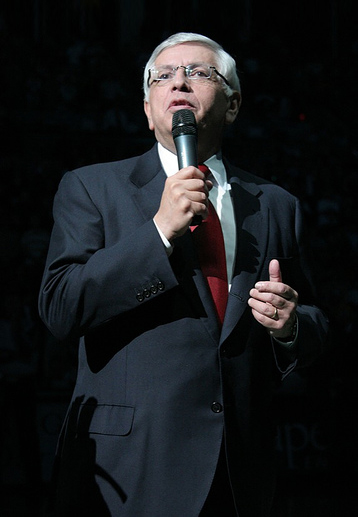
I was thirty years old, and I managed to exchange a few words with David Stern, who was on the court after the Spurs’ victory. My France Inter microphone was probably of little use, but Stern—the ultimate communications maestro—told me how happy he was to see an NBA franchise bringing its magic to Bercy that night. That was enough for me. I was in awe. The Commissioner spoke to me. It felt like a deity addressing a young provincial.
A few years later, I would cover NBA games for French radio stations from New York, where I was living. I interviewed Boris Diaw, Tony Parker, Joakim Noah, Thabo Sefolosha, and Alexis Ajinça. My heart was full.
2026, twenty years later, I now live in Switzerland, where U.S. basketball has become a genuine phenomenon. The NBA is an immensely attractive league in a country that rarely reaches the international elite with either its clubs or its national team.
Though distant and long confined to the middle of the night, the NBA’s light has gradually reached Switzerland through a handful of players who have managed to break into the league: Thabo, Clint, Kyshawn, and Yanic—the four Swiss musketeers—who have undoubtedly kept local fans awake over the past years. Today, thanks to modern technology, watching NBA stars live is possible 24/7, and soon, attending games in person will be too. Just nearby, in Milan, Lyon, or Munich, wouldn’t it be tempting to become a European ambassador for the American league? This will become a reality in 2027. I intend to be part of it.
Swiss professionals working closely with FIBA know that NBA Europe could represent a real opportunity—to shine, to raise the profile of Swiss basketball, and to help more players reach the league: the next Cotture, Jurkovitz, Mladan, or Mrazek.
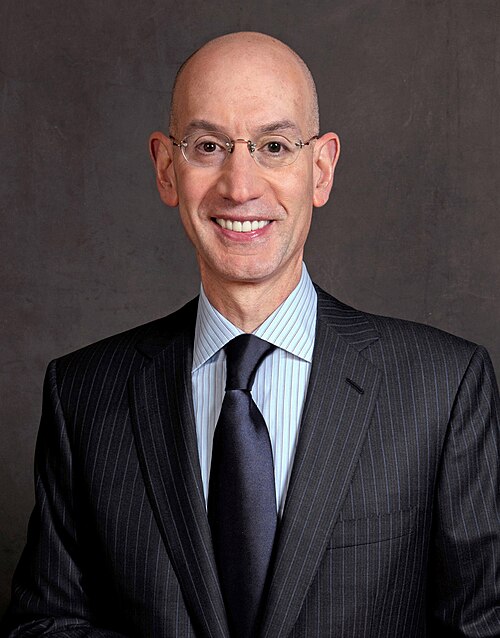
Will the EuroLeague have to adopt a more modest stance after years of dominating European club competitions and positioning itself as a rival to FIBA? FIBA, at least, appears to have recognized the moment by partnering with Adam Silver and his global brand—seeking greater audiences, increased legitimacy, and, inevitably, higher revenues. Protecting its international competitions, starting with the Olympic Games, is central to this strategy. The NBA will arrive in Europe in alignment with local partners. This seems inevitable.
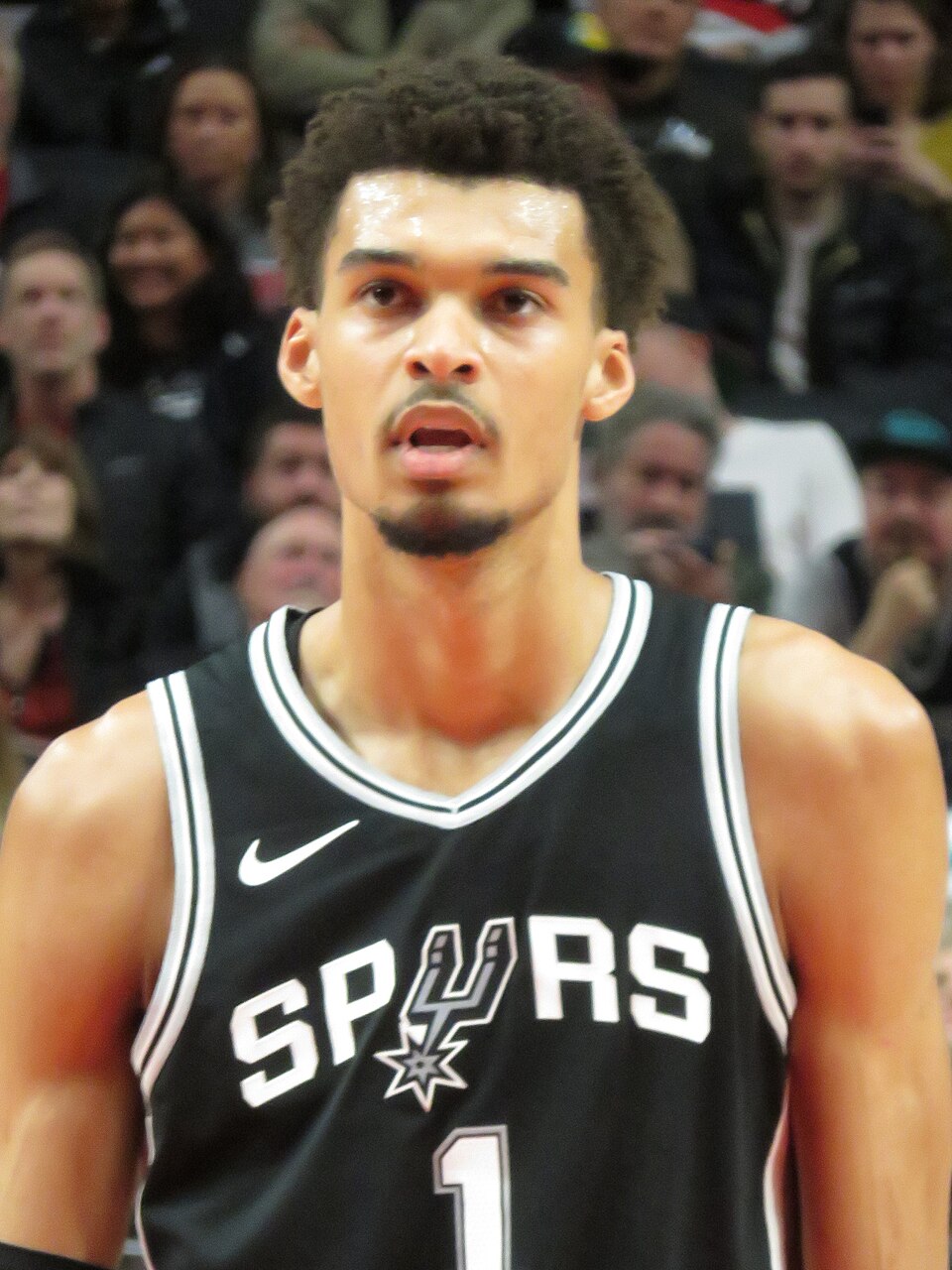
The EuroLeague has produced extraordinary talents such as Luka Dončić, Nikola Jokić, and Victor Wembanyama, yet the perception of Europe as merely a feeder system for the NBA continues to grow. This dynamic could be reversed with the arrival of NBA Europe in the 2027 season. These “Made in Europe” players found their path to the Grail—the NBA, with its 30 franchises and two conferences—through a distinctly European system of elite training and competition. For young prospects like Dončić, the EuroLeague remains one of the finest development environments in the world.
If the EuroLeague model were to evolve into an NBA Europe model, it would represent a spectacular paradigm shift. Yet EuroLeague management is currently exerting pressure on Real Madrid and other clubs to commit to long-term, ten-year agreements, threatening exclusion for those unwilling to sign. The EuroLeague powerhouses tempted by the NBA–FIBA Europe project have until late January 2026 to fall back in line—or face the ultimate sanction: exclusion from both the EuroLeague and the EuroCup.
Today, the NBA is pushing further into Europe, returning to London and Berlin in the coming days, while also pursuing expansion with two new U.S. franchises and relaunching mid-season competitions such as the NBA Cup—recently won by the Knicks—which allows clubs to add silverware at relatively low cost.
For years, the NBA has been more than just an American league; it has become a truly global phenomenon, particularly in Asia and Africa, with international players coming primarily from Europe and Africa. The NBA logo is now ubiquitous worldwide, appearing on jerseys with locally adapted branding.
Regular-season games played abroad are supported by strategic partnerships with local broadcasters. As part of NBA Europe’s expansion, the Memphis Grizzlies will play games featuring one of the league’s most magnetic stars, Ja Morant—a player who has captured the imagination of the franchise’s front office. Berlin and London, both cities earmarked for potential future franchises, are eager to showcase star power, regardless of past debates around NBA etiquette and discipline.
The NBA is reshaping its business model to appeal to a global audience and views Europe as a key growth market, attractive to investors such as Marc Lasry, former co-owner of the Milwaukee Bucks, who has shown interest in the new opportunities created by a future NBA Europe league.
David Kahn, the former journalist from Oregon who later ran basketball operations for the Minnesota Timberwolves, has become a symbol of the arrival of American know-how in European club management. He is widely credited with the remarkable turnaround of HTV, transforming it into Paris Basketball, now a leading force in European basketball.
Europe represents major growth potential. Since the 1990s, European players like Dirk Nowitzki, Pau Gasol, and Tony Parker have popularized American basketball on the continent. Competing on international windows while proving themselves in Texas, Bavaria, Catalonia, California, or Normandy, these ambassadors—each NBA champions—have always given back to their home federations. Respect.
The NBA organizes official games in Europe every season – in Paris, Barcelona, London, and Berlin. Tens of thousands attend in person, and millions watch on European TV, immersed in a spectacular NBA experience: enhanced lighting, wider courts, comfortable benches, microphones near the baskets to catch the splash of three-pointers, and amplified, compressed sound that makes you want to play in your local playground after hearing the real sound effet, NBA has invented efficient sport marketing policies.

In the United States, the NBA continues to expand, consolidating its presence in new markets. Franchises such as the Charlotte Hornets and Memphis Grizzlies have helped extend the league beyond its traditional strongholds, generating new revenue streams through television rights, merchandising, and special events.
Further expansion could include Las Vegas, Seattle, Mexico City (already present in NBA development league the G-League), and additional Canadian cities. Canada already stands as the NBA’s second home country through the Toronto Raptors, and major cities such as Vancouver, Ottawa, Montreal, Quebec City, Calgary, and Edmonton could also be viable candidates—though political and financial obstacles remain. Seattle, with its fully renovated NBA-ready arena and the success of its WNBA franchise, the Storm, remains a prime candidate for revival following the departure of the SuperSonics in the late 2000s.
The NBA has long been a symbol of excellence—the American Dream for basketball players around the world. With the NBA Europe project, that dream is becoming a global one. FIBA’s leadership – through its secretary general Andreas Zagklis – recognized this shift and saw an opportunity to further elevate the sport. They agreed to support the project on one key condition: that FIBA rules apply. NBA Europe would therefore operate as a FIBA competition, a significant concession by Adam Silver and his team.
The man tasked with steering this new venture is George Aivazoglou, who will play a central role in shaping its future. Good luck to all involved—NBA and FIBA alike.
David Glaser

 Suississimo